Purchase Plus Improvements Mortgages in Ontario: Finance Your Dream Renovations into Your Home Purchase
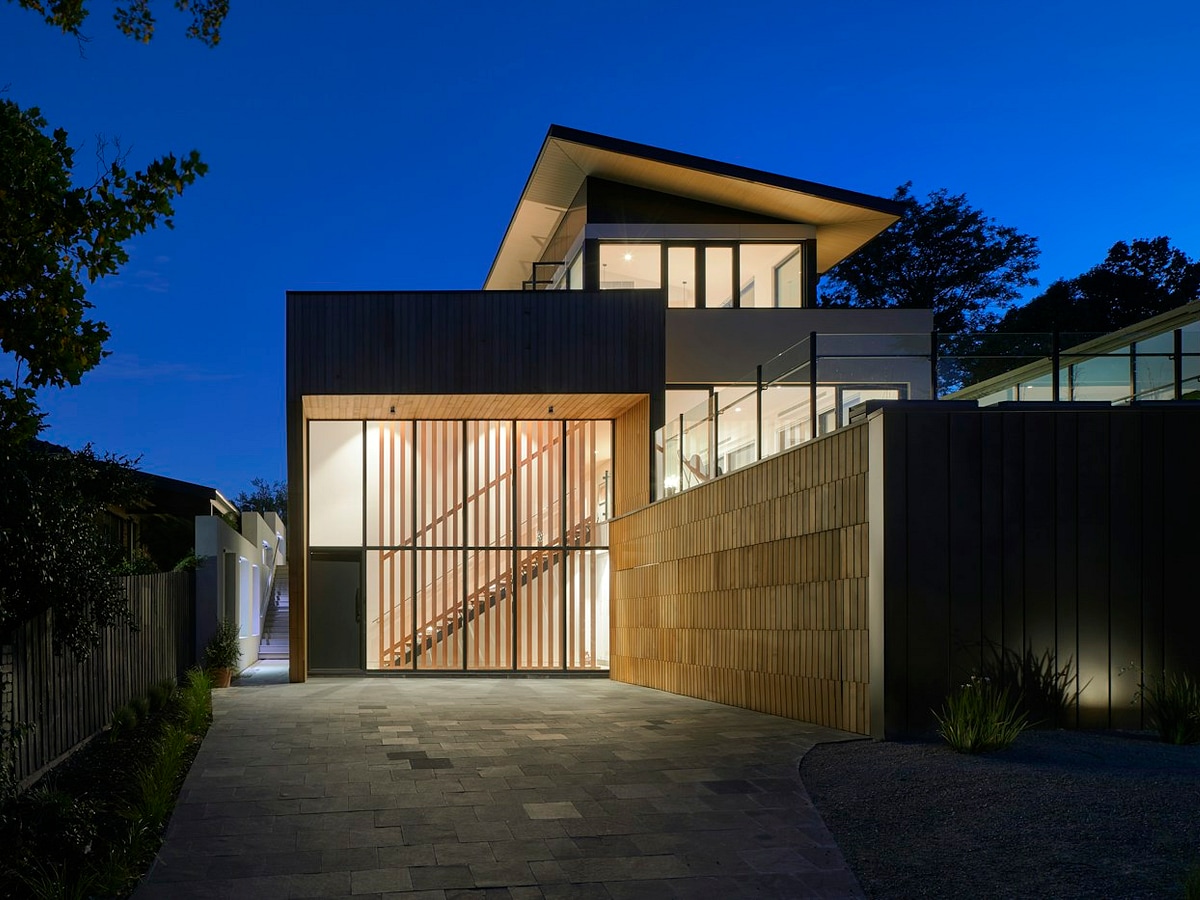
Learn how Purchase Plus Improvements mortgages in Ontario allow you to finance renovations like a new kitchen or basement directly into your home purchase, leveraging wholesale rates.
Buying a home in Ontario is often just the first step in creating your ideal living space. Many properties, especially in competitive markets like London, St. Thomas, Woodstock, or Strathroy, might require updates to truly feel like home. The challenge for many prospective homeowners is how to finance these essential renovations without depleting their savings or resorting to high-interest debt. This is where a specialized financial tool, the Purchase Plus Improvements (PPI) mortgage, becomes invaluable.
A Purchase Plus Improvements mortgage allows you to roll the cost of planned renovations directly into your primary home loan. Instead of securing separate financing at potentially much higher interest rates, you leverage your mortgage's lower, institutional wholesale rate to fund significant upgrades. This strategy is particularly powerful in today's market, where the Bank of Canada's policy interest rate (currently 2.25%) and major commercial bank prime rates (4.45%) influence all lending. By integrating renovation costs into a mortgage, you can achieve a more affordable monthly payment compared to using credit cards at 19.99% or unsecured lines of credit.
At NewLife Mortgages with The Mortgage Firm, our mission is to empower Ontario homebuyers with smart, strategic financing. Dallas Martin, Licensed Mortgage Agent Level 2 (FSRA Licence #M17001133), specializes in navigating these complex scenarios, ensuring you understand how to maximize your purchasing power and create the home you’ve always envisioned, right from day one. This comprehensive guide will explain everything you need to know about PPI mortgages, from qualification to disbursement, with real-world examples anchored to Southwestern Ontario's vibrant housing market.
What Is a Purchase Plus Improvements (PPI) Mortgage in Ontario?
A Purchase Plus Improvements (PPI) mortgage in Ontario is a specialized financing option that allows homebuyers to include the cost of planned home renovations directly into their primary purchase mortgage. This means you only have one mortgage payment for both the home and the upgrades, leveraging lower institutional interest rates for your improvements.
The Purchase Plus Improvements mortgage is designed for individuals buying a property that requires immediate or near-future renovations. Instead of securing a mortgage for the purchase price and then finding separate, often more expensive, financing for renovations, a PPI mortgage consolidates these costs. The lender approves your mortgage based on the home's "as-improved" appraised value, assuming the renovations are completed. This allows you to borrow a larger sum upfront to cover both the acquisition and the planned upgrades.
This type of mortgage is ideal for a wide range of improvements, from cosmetic updates like new flooring or paint to more substantial projects such as a kitchen remodel, bathroom renovation, or even finishing a basement. The key is that the improvements must add value to the property and be clearly defined with contractor quotes or a detailed budget. It’s a strategic way to acquire a property that might be priced lower due to its current condition, then immediately enhance its value and functionality without financial strain.
How Do Purchase Plus Improvements Mortgages Work in Southwestern Ontario?
In Southwestern Ontario, a PPI mortgage typically involves obtaining contractor quotes for desired renovations, which are then submitted with your mortgage application. The lender uses an "as-improved" appraisal to determine the property's value post-renovation. Funds for improvements are held back by the lender and released upon satisfactory completion and inspection of the work.
The process for a Purchase Plus Improvements mortgage is structured to ensure that both the borrower and the lender are protected. It begins with identifying a property you wish to purchase and the specific renovations you plan to undertake. Let's consider a scenario in St. Thomas, where the benchmark price for a detached home is around $584,000. You find a charming older home at this price, but it needs a significant kitchen overhaul and a main bathroom upgrade, estimated at $40,000.
Here’s a step-by-step breakdown of how it would typically unfold:
- Identify Property & Renovations: You select the $584,000 St. Thomas home and outline the $40,000 worth of improvements.
- Obtain Detailed Quotes: You gather firm quotes from licensed contractors for all planned work, detailing costs for materials and labour. These quotes are critical for the lender to assess the scope and expense.
- Mortgage Application & "As-Improved" Appraisal: You apply for a mortgage with Dallas Martin, Licensed Mortgage Agent Level 2, through NewLife Mortgages with The Mortgage Firm. We submit your purchase agreement and renovation quotes to the lender. The lender will then order an appraisal of the property, but critically, this appraisal will provide two values: the current "as-is" value and a projected "as-improved" value after the renovations are completed. In our St. Thomas example, the "as-improved" value would be considered $624,000 ($584,000 purchase price + $40,000 renovations).
- Mortgage Approval and Funding Holdback: Based on the "as-improved" appraisal, the lender approves your mortgage for the total amount. A portion of the mortgage funds, specifically the amount allocated for renovations (e.g., $40,000), is "held back" by the lender. You receive the funds for the purchase price at closing.
- Completion of Renovations: After closing, you proceed with the renovations as per the approved plan.
- Inspection & Fund Release: Once the renovations are complete, the lender will arrange for a re-inspection (or request photos/receipts) to confirm the work has been done satisfactorily and according to the plan. Upon confirmation, the held-back funds are released directly to you to pay your contractors or reimburse yourself.
This structured approach ensures that the funds are used for their intended purpose, protecting the increased value of the property and the lender's investment.
What Types of Renovations Are Eligible for a Purchase Plus Improvements Mortgage?
Eligible renovations for a PPI mortgage typically include any improvement that enhances the property's value, functionality, or safety. Common examples are kitchen and bathroom remodels, basement finishing, new flooring, windows, roofing, and additions. Cosmetic changes like painting, while improving aesthetics, must be part of a larger project or significantly contribute to value.
Lenders are generally flexible with the types of renovations, provided they are permanent fixtures and add tangible value. Here’s a list of commonly approved improvements:
- Kitchen & Bathroom Remodels: The most popular and often highest-value-adding renovations.
- Basement Finishing: Converting an unfinished basement into living space (e.g., a rec room, extra bedrooms, or a secondary suite).
- Structural Changes: Additions, wall removals (with engineering approval), or significant layout modifications.
- Major System Upgrades: New HVAC systems, electrical panel upgrades, plumbing overhauls.
- Exterior Improvements: New roofing, windows, doors, siding, or landscaping that significantly enhances curb appeal and property value.
- Flooring: Replacement of old carpets with hardwood, laminate, or tile.
- Accessibility Modifications: Ramps, wider doorways, bathroom modifications for accessibility.
It's important to note that while minor cosmetic updates like painting are typically not approved as standalone PPI projects, they can be included if they are part of a larger, value-adding renovation. For instance, repainting a newly renovated kitchen would be acceptable. Most lenders will approve renovation costs ranging from a few thousand dollars up to $40,000 or $50,000 for high-ratio insured mortgages (CMHC, Sagen, Canada Guaranty), and sometimes even higher for conventional mortgages with larger down payments.
What Are the Financial Benefits of a PPI Mortgage Over Other Renovation Financing Options?
A PPI mortgage offers significantly lower interest rates than credit cards or unsecured lines of credit, resulting in much lower monthly payments and total interest paid. It consolidates debt into one manageable mortgage payment, improving cash flow and allowing homeowners to build equity faster by investing in their property's value from day one.
The primary advantage of a PPI mortgage is the ability to finance renovations at the much lower interest rates associated with a primary mortgage. With the 5-year Government of Canada bond yield currently around 2.95%, fixed mortgage rates from wholesale lenders can be as low as 4.49%, for example. Compare this to typical credit card rates of 19.99% or personal loan rates often exceeding 8-10%. The difference in borrowing cost is substantial.
How Does the Monthly Payment Compare for a $40,000 Renovation?
Financing a $40,000 renovation through a PPI mortgage at 4.49% over 25 years adds approximately $212 to your monthly payment. In contrast, using a credit card at 19.99% would demand significantly higher minimum payments and accrue vastly more interest, making the PPI option far more affordable and financially prudent.
Let's use our St. Thomas example of a $584,000 home with $40,000 in renovations, resulting in an "as-improved" value of $624,000. Assuming a 5% down payment for an insured mortgage, the total mortgage amount would be $592,800 ($624,000 - $31,200 down payment + CMHC premium). For simplicity, let's isolate the $40,000 renovation cost and compare financing options.
To calculate the monthly payment for the $40,000 renovation component within a mortgage, we use the Section 6 Canada Interest Act semi-annual compounding formula:
r_m = (1 + r/2)^(1/6) - 1
Where:
- r_m = effective monthly interest rate
- r = annual nominal interest rate (e.g., 0.0449 for 4.49%)
Using a wholesale fixed rate of 4.49%:
r_m = (1 + 0.0449/2)^(1/6) - 1
r_m ≈ 0.003698 (or 0.3698% per month)
Now, the monthly payment formula (M) for a loan (P) over N months at a monthly interest rate (r_m):
M = P * [r_m * (1 + r_m)^N] / [(1 + r_m)^N - 1]
For $40,000 over 25 years (300 months) at 4.49%:
M = $40,000 * [0.003698 * (1 + 0.003698)^300] / [(1 + 0.003698)^300 - 1]
M ≈ $212.16
This means adding $40,000 in renovations to your mortgage at a 4.49% rate over 25 years would increase your monthly payment by approximately $212. This is a very manageable increase for significant home improvements.
As the table clearly illustrates, while the PPI mortgage has a longer amortization period, the monthly payment is dramatically lower, freeing up significant cash flow for other expenses. Even if you paid off the PPI portion faster with additional payments, the underlying interest rate is vastly superior. This makes a PPI mortgage an incredibly cost-effective way to finance home improvements, especially when compared to high-interest consumer debt.
Who Qualifies for a Purchase Plus Improvements Mortgage in Ontario?
Qualification for a PPI mortgage in Ontario follows standard mortgage underwriting guidelines, including strong credit (680+), stable income, and manageable debt-service ratios (39% GDS, 44% TDS). The key difference is that affordability is assessed against the "as-improved" property value, and the borrower must demonstrate the ability to manage the higher loan amount.
Qualifying for a Purchase Plus Improvements mortgage involves meeting the same rigorous underwriting standards as any other institutional mortgage in Canada. Lenders, guided by OSFI Guideline B-20, assess your financial health to ensure you can comfortably manage the mortgage payments. Key factors include:
- Credit Score: A strong credit history, typically a score of 680 or higher, is essential.
- Income Stability: Lenders look for consistent, verifiable income from employment or self-employment. For self-employed individuals using stated income or bank statement verification programs, a minimum 20% down payment (maximum 80% LTV) is always required.
- Down Payment: For insured mortgages, a minimum of 5% down payment is required for properties up to $500,000, with 10% on the portion between $500,000 and $999,999. The maximum insured mortgage is capped at a purchase price of $1,499,999. For conventional mortgages, a minimum of 20% down payment is needed.
- Debt-Service Ratios: Your Gross Debt Service (GDS) ratio must not exceed 39%, and your Total Debt Service (TDS) ratio must not exceed 44%. These ratios are calculated using the higher of your contract rate plus 2.00% or the OSFI floor of 5.25%. For example, if your contract rate is 4.49%, you would qualify at 6.49% (4.49% + 2.00%), as this is higher than the 5.25% OSFI floor.
- Existing Debt: All existing consumer debt, including credit cards, lines of credit, and vehicle loans/leases, will be factored into your TDS ratio. Fixed-term auto loans with 10 to 12 remaining payments can sometimes be excluded if you have sufficient liquid reserves to cover them, whereas vehicle leases are always treated as perpetual liabilities.
The crucial distinction with a PPI mortgage is that your affordability will be assessed against the larger loan amount that includes the renovation funds. This means your income must support the mortgage based on the "as-improved" value of the property. Dallas Martin, Licensed Mortgage Agent Level 2, can help you calculate your precise affordability and navigate these requirements.
Can First-Time Home Buyers Use a Purchase Plus Improvements Mortgage?
Yes, first-time home buyers in Ontario can absolutely utilize a Purchase Plus Improvements mortgage. This is an excellent strategy for those looking to enter the market with a more affordable "fixer-upper" and customize it from the start, often combining it with down payment strategies like the RRSP Home Buyers' Plan or the First Home Savings Account.
For first-time home buyers, a PPI mortgage can be a game-changer. It opens up opportunities to purchase homes that might be slightly less expensive due to their need for updates, allowing them to stretch their budget further while still achieving their dream home. Instead of waiting years to save for renovations, they can incorporate them from day one.
First-time home buyers can also combine a PPI mortgage with government programs designed to assist with down payments:
- RRSP Home Buyers' Plan (HBP): Eligible buyers can withdraw up to $60,000 ($120,000 per couple) from their RRSPs tax-free to use as a down payment, which must be repaid over 15 years.
- First Home Savings Account (FHSA): This newer program allows eligible individuals to save up to $40,000 ($80,000 per couple) tax-free for a first home, with contributions being tax-deductible and withdrawals for a qualifying home tax-free.
Combining these down payment strategies with a PPI mortgage provides a powerful financial toolkit for first-time buyers. For a deeper dive into maximizing your down payment, explore our guide on First-Time Home Buyer Down Payment Stacking: FHSA and RRSP HBP Tax Advantage.
What Is the Process for Securing a Purchase Plus Improvements Mortgage?
The process involves pre-approval, finding a home, obtaining renovation quotes, submitting a full application with an "as-improved" appraisal, formal approval with a holdback, closing the purchase, completing renovations, and finally, inspection and release of the held-back funds. Expert guidance from a mortgage agent streamlines this multi-step journey.
While the concept is straightforward, the execution requires careful planning and coordination. Working with an experienced mortgage agent like Dallas Martin, Licensed Mortgage Agent Level 2, is crucial to ensure a smooth process. Here's a detailed breakdown:
- Get Pre-Approved: Start by getting a mortgage pre-approval. This will give you a clear understanding of your maximum affordable purchase price and renovation budget, based on your income and credit. We can also secure a 120-day wholesale rate hold during this stage, protecting you from potential rate increases while you shop for a home.
- Find Your Home and Plan Renovations: Identify a property you wish to purchase. As you view homes in London, Woodstock, or Strathroy, consider which renovations would be essential and which would be value-adding. Get preliminary estimates for these improvements.
- Obtain Formal Contractor Quotes: Once your offer is accepted, obtain detailed, written quotes from reputable, licensed contractors for all planned work. These quotes should include a breakdown of costs for materials and labour, and specify completion timelines.
- Submit Full Mortgage Application: With the accepted offer and contractor quotes in hand, Dallas Martin will submit your complete mortgage application to the lender. This package includes your financial documents, the purchase agreement, and the renovation quotes.
- "As-Improved" Appraisal: The lender will arrange for an appraisal that assesses the property's current value ("as-is") and its projected value after the renovations are completed ("as-improved"). This "as-improved" value is critical as it determines the maximum mortgage amount.
- Mortgage Approval with Renovation Holdback: If approved, the lender will issue a commitment for the full mortgage amount, including the renovation funds. A specific portion of the loan (the renovation funds) will be held back until the work is complete.
- Close on the Property: You close the purchase of the home, and the initial mortgage funds (excluding the renovation holdback) are advanced.
- Complete Renovations: You proceed with your contractors to complete the approved renovations. It’s important to stick to the approved scope of work.
- Final Inspection and Fund Release: Once the renovations are complete, notify your lender. They will arrange for a final inspection (or request proof of completion like photos and paid invoices) to verify the work has been done as agreed. Upon satisfactory verification, the held-back renovation funds are released to you.
Throughout this process, Dallas Martin, Licensed Mortgage Agent Level 2 (FSRA Licence #M17001133) at NewLife Mortgages with The Mortgage Firm (FSRA Brokerage Licence #13466), will act as your advocate, coordinating with the lender, appraiser, and legal teams to ensure all conditions are met efficiently. This expertise is particularly valuable in navigating the nuances of the holdback and release process.
What Happens if the Renovations Cost More or Less Than Expected?
If renovations cost less than the approved holdback, the unused portion is typically applied as a principal prepayment on your mortgage. If costs exceed the holdback, the borrower is responsible for covering the difference through personal funds or other financing, as the lender will only release the pre-approved held-back amount.
It's crucial to obtain accurate and detailed quotes to minimize discrepancies. However, unforeseen circumstances can arise:
- Under Budget: If the actual cost of renovations comes in under the amount held back by the lender, the remaining funds will usually be applied directly to your mortgage principal. This is a welcome outcome as it reduces your overall debt.
- Over Budget: If the renovations end up costing more than the amount held back, the responsibility for covering the excess falls to you, the homeowner. The lender will only release the amount initially approved and held back. This highlights the importance of having a contingency fund for any renovation project, typically 10-15% of the estimated cost.
Clear communication with your contractors and Dallas Martin is key to managing these situations effectively. Keeping a close eye on your budget and being prepared for potential overruns will help ensure a stress-free renovation experience.
Can You Use a PPI Mortgage to Refinance for Renovations Later?
A traditional Purchase Plus Improvements mortgage is specifically for financing renovations at the time of purchase. If you already own your home and wish to finance renovations, you would typically explore a mortgage refinance, a home equity line of credit (HELOC), or a second mortgage. These options allow you to tap into your existing home equity.
While the PPI mortgage is a powerful tool at the time of purchase, it is not designed for existing homeowners. If you've owned your home for a while and now wish to undertake significant renovations, you have several other avenues:
- Mortgage Refinance: This involves breaking your existing mortgage and taking out a new, larger mortgage that includes the funds for your renovations. This option typically offers the lowest interest rates, similar to a new purchase mortgage. Learn more about how a refinance can help with debt consolidation and renovations at our refinancing page.
- Home Equity Line of Credit (HELOC): A HELOC is a revolving credit facility secured by your home's equity. You can borrow, repay, and re-borrow funds up to a certain limit. Interest rates are typically variable and tied to the prime rate.
- Second Mortgage: If you don't want to break your existing first mortgage, a second mortgage can be registered against your property. While interest rates are usually higher than a first mortgage, they can be a viable option for those who want to avoid prepayment penalties on their existing loan. For more complex scenarios, including private lending solutions, visit our private lending page.
Each option has its own implications regarding interest rates, fees, and impact on your existing mortgage. Consulting with Dallas Martin, Licensed Mortgage Agent Level 2, is essential to determine the best strategy for your unique situation and financial goals. For those considering switching lenders at renewal without the stress test, our guide on The OSFI Straight Switch Exemption provides valuable insights.
Why Work with Dallas Martin and NewLife Mortgages for Your PPI Mortgage?
Dallas Martin, Licensed Mortgage Agent Level 2 (FSRA Licence #M17001133), offers specialized expertise in PPI mortgages, navigating complex underwriting and holdback processes with access to a wide network of wholesale lenders. We provide personalized, mathematically supported advice, ensuring you secure the most competitive rates and a seamless financing experience for your Southwestern Ontario home renovations.
Navigating the intricacies of a Purchase Plus Improvements mortgage requires more than just filling out forms. It demands a deep understanding of lender policies, appraisal requirements, and the local real estate market. Dallas Martin, Licensed Mortgage Agent Level 2 (FSRA Licence #M17001133), brings this expertise to every client at NewLife Mortgages with The Mortgage Firm (FSRA Brokerage Licence #13466).
Here’s how we add value:
- Access to Wholesale Lenders: Unlike traditional banks that offer a limited range of products, we work with a vast network of institutional wholesale lenders. This ensures you get access to the most competitive rates and flexible terms for your PPI mortgage, such as the 4.49% wholesale rate used in our examples.
- Expert Guidance: From structuring your renovation quotes to coordinating with appraisers and ensuring timely fund releases, Dallas provides end-to-end support, simplifying a potentially complex process.
- Market Knowledge: Anchored in London, Ontario, we have intimate knowledge of the Southwestern Ontario market, including London, St. Thomas, Woodstock, and Strathroy. This regional expertise allows us to provide relevant advice and accurate property value assessments. Visit our London location page for more details.
- Personalized Solutions: We take the time to understand your unique financial situation and renovation goals, crafting a mortgage solution that perfectly aligns with your needs.
- Compliance & Transparency: As a licensed agent under The Mortgage Firm (FSRA Brokerage Licence #13466), Dallas Martin adheres to the highest standards of regulatory compliance and transparency, ensuring you are fully informed at every stage.
The current macroeconomic trajectory, while flat, still presents challenges with potential Bank of Canada rate hikes. Securing a 120-day wholesale rate hold through NewLife Mortgages can protect you from these fluctuations, giving you peace of mind as you plan your purchase and renovations.
Don't let the thought of renovation costs deter you from buying the home with potential. A Purchase Plus Improvements mortgage can turn a "fixer-upper" into your dream home, affordably and efficiently. Let Dallas Martin, Licensed Mortgage Agent Level 2, help you unlock your property's full potential.
Ready to Transform Your New Home?
Connect with Dallas Martin, Licensed Mortgage Agent Level 2 (FSRA Licence #M17001133) at NewLife Mortgages with The Mortgage Firm (FSRA Brokerage Licence #13466). We'll help you structure a Purchase Plus Improvements mortgage that makes your renovation dreams a reality.
Explore our Rate Watcher to monitor market trends or secure your 120-day wholesale rate hold today.
Get Started with Your Renovation MortgageDallas Martin — Licensed Mortgage Agent Level 2 (FSRA Licence #M17001133)
NewLife Mortgages • The Mortgage Firm (FSRA Brokerage Licence #13466) • 204 Oxford Street West, London, ON N6H 1S4
Dallas Martin is a Licensed Mortgage Agent Level 2 (FSRA Licence #M17001133) operating under The Mortgage Firm (FSRA Brokerage Licence #13466) at 204 Oxford Street West, London, Ontario N6H 1S4 (Direct: 519-495-7250). Interviewed by CBC News on Ontario housing market supply, interest rate pressures, and regional mortgage underwriting, Dallas specializes in wholesale rate negotiation, OSFI Guideline B-20 renewal switches, bridge financing, and equity structuring across London, St. Thomas, Woodstock, and Strathroy.
Ready to Run Your Exact Mortgage Numbers With Dallas Martin?
Skip the retail bank branch guesswork. Speak directly with Dallas Martin, Licensed Mortgage Agent Level 2 (FSRA Licence #M17001133) for a custom debt service calculation, 120-day wholesale rate hold, or same-day pre-approval across London, St. Thomas, Woodstock, and Strathroy.