

How Can Homeowners Finance an Additional Residential Unit (ARU) or Garden Suite in London, Ontario?
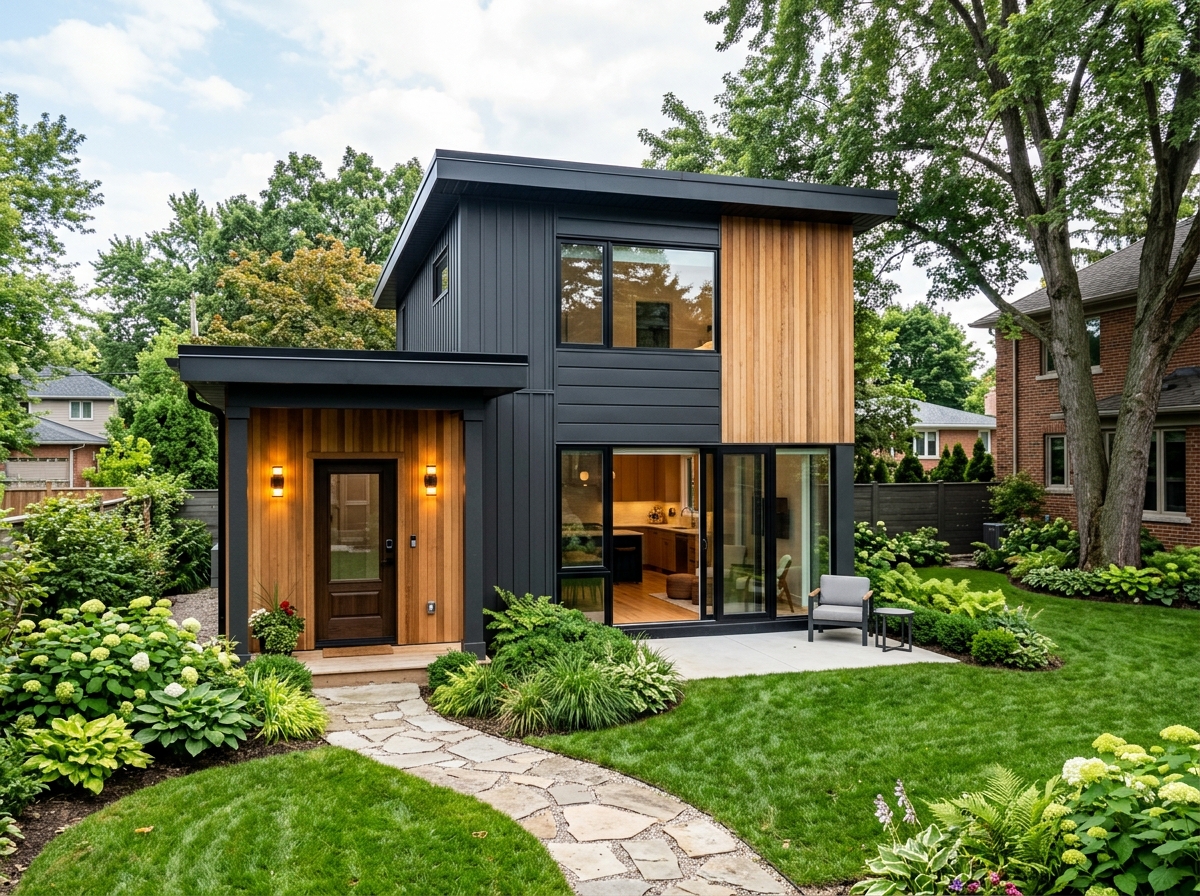
Finance an Additional Residential Unit (ARU) or detached garden suite in London, Ontario. Master guide covering CMHC 90% as-improved refinancing, City of London By-law Z.-1, CP-1600-300 floor caps, CP-19 rental licensing, and CIP loans with Dallas Martin, Licensed Mortgage Agent Level 2 (FSRA #M17001133) at The Mortgage Firm (FSRA Brokerage #13466).
How to Finance an Additional Residential Unit (ARU) or Garden Suite in London, Ontario
London homeowners can finance an Additional Residential Unit (ARU) or detached garden suite by accessing up to 90% post-construction value through the CMHC Insured Secondary Suite Refinance, borrowing 80% conventional equity via mortgages or HELOCs, or securing a $45,000 City of London loan.
Developing an Additional Residential Unit (ARU) or detached garden suite has emerged as one of the most lucrative and strategically sound wealth-building vehicles for Southwestern Ontario homeowners. Across London, St. Thomas ($584,000 benchmark), Woodstock ($658,000 benchmark), and Strathroy ($625,000 benchmark), property owners are transforming underutilized basements, oversized backyards, and detached garages into high-yielding residential units that generate substantial monthly cash flow while increasing total property asset value.
However, navigating secondary unit financing in London requires a precise grasp of municipal planning bylaws, statutory underwriting rules under OSFI Guideline B-20, and newly introduced federal mortgage programs. Many homeowners inadvertently rely on obsolete information—such as the defunct Canada Secondary Suite Loan Program (CSSLP)—or fail to account for municipal gross floor area caps and mandatory rental licensing. Operating under the regulatory governance of the Financial Services Regulatory Authority of Ontario (FSRA) through The Mortgage Firm (FSRA Brokerage Licence #13466), NewLife Mortgages provides institutional mortgage advisory led by Dallas Martin (Licensed Mortgage Agent Level 2, FSRA Licence #M17001133). This comprehensive guide details the capital structures, underwriting models, zoning constraints, and municipal grants governing secondary suite financing in London, Ontario.
What Is an Additional Residential Unit Under City of London Bylaws?
An Additional Residential Unit is a self-contained, permanent dwelling featuring private culinary, sanitary, sleeping facilities, and independent exterior access on a residential parcel. Under City of London Zoning By-law Z.-1, qualifying properties can host up to four total units, including three secondary units.
Under the statutory framework established by The London Plan and comprehensive Zoning By-law Z.-1 (Section 4.37), the City of London authorizes up to four total dwelling units per residential lot as-of-right on parcels where single-detached, semi-detached, street townhouse, duplex, triplex, or converted dwellings are legally permitted. A primary dwelling can host up to three Additional Residential Units (ARUs), giving homeowners unprecedented flexibility to densify their property footprint.
Across Southwestern Ontario, residential secondary suites manifest in four distinct structural configurations:
- Basement or Interior Conversions: Self-contained rental suites constructed within the existing footprint of the principal dwelling, such as finished basement apartments or attic conversions.
- Attached Structural Additions: Ground-level or multi-storey architectural additions physically integrated into the main residential structure.
- Detached Garden Suites: Standalone accessory dwellings constructed within the rear or interior side yard, commonly known as coach houses, granny flats, or tiny homes.
- Accessory Structure Conversions: Retrofitted detached garages, workshops, or historic carriage houses converted into fully winterized, year-round residences.
To prevent excessive structural density on individual residential parcels, London municipal bylaws stipulate that no more than two ARUs may be located within a detached accessory building on a single property. For homeowners evaluating property acquisition or equity deployment across London and Middlesex County, consulting an independent brokerage is essential to verify structural feasibility before committing capital. Review our comparative analysis on why independent brokerages outperform traditional bank branches.
What Are the Zoning, Siting, and Size Rules for London ARUs?
London ARUs cannot exceed 80% of the primary dwelling's gross floor area, with a 25-square-metre (269 sq ft) minimum. Secondary units are capped at two bedrooms, require interior side or rear yard siting, and mandate municipal rental licensing under By-law CP-19.
While provincial legislation under Bill 23 (More Homes Built Faster Act) expanded general secondary suite permissions, municipalities maintain statutory authority over building envelopes, yard setbacks, and licensing. In London, municipal council enacted Interim Control By-law CP-1600-300 and Council Amendment Z-25159 to establish strict zoning baselines designed to protect established neighbourhoods from over-intensification.
To curb unregulated student rooming houses in designated Near Campus Neighbourhoods (NCN) surrounding Western University and Fanshawe College, London limits each ARU to a maximum of two bedrooms. Furthermore, under the Ontario Building Code (OBC), single-occupancy bedrooms require a clear minimum floor area of 7 square metres (75 sq ft), while double-occupancy bedrooms mandate at least 11 square metres (118 sq ft).
All detached garden suites must connect directly to municipal water, sanitary sewer, and hydro lines. For basement suites, finished floor elevations cannot sit below the municipal sanitary sewer main without an engineered backwater valve to prevent severe backflow and flood damage.
Did the Canada Secondary Suite Loan Program Get Cancelled?
Yes. The $80,000 Canada Secondary Suite Loan Program (CSSLP) was formally cancelled in Federal Budget 2025 and never opened for applications. Homeowners should disregard outdated guides; the active federal financing program is the CMHC Insured Secondary Suite Refinance launched on January 15, 2025.
One of the most persistent sources of misinformation in digital mortgage media is the continued promotion of the Canada Secondary Suite Loan Program (CSSLP). First announced in the 2024 Federal Budget as a $40,000 forgivable loan and subsequently expanded in late 2024 to an $80,000 low-interest loan at 2.00% fixed over 15 years, the federal government officially cancelled the CSSLP in Budget 2025 prior to its scheduled rollout.
The program was terminated because federal housing authorities determined that direct low-interest government lending created structural friction with primary mortgage covenants, while competing with broader mortgage default insurance expansions. Homeowners planning an ARU must disregard legacy articles citing the CSSLP. The active, statutory federal mechanism is the CMHC Insured Secondary Suite Refinance program, which took effect nationwide on January 15, 2025.
How Does the CMHC 90% As-Improved Refinance Work for Secondary Suites?
The CMHC Insured Secondary Suite Refinance allows homeowners to borrow up to 90% of their property's post-construction "as-improved" value up to $2,000,000. It requires owner-occupancy, a minimum 90-day lease, and permits amortizations up to 30 years for verified construction expenses.
Under conventional mortgage underwriting enforced by OSFI Guideline B-20, uninsured refinances are strictly capped at 80.00% of a property's current, unimproved market value. This limitation historically created acute capital shortages for homeowners who wanted to build a $200,000 detached garden suite but only possessed $70,000 in existing home equity.
The CMHC Insured Secondary Suite Refinance solves this valuation hurdle by establishing loan eligibility against the property's future, post-construction market valuation:
- Architectural Permitting: The homeowner engages an architect or designer holding a Building Code Identification Number (BCIN) to draft comprehensive architectural drawings conforming to the OBC and City of London By-law Z.-1, followed by a formal building permit application.
- Dual-Value Underwriting: An accredited real estate appraiser evaluates both the current "as-is" market value and the projected "as-improved" valuation based on builder contracts and construction specs. Critical Rule: Lender and CMHC commitments must be formally approved before any ground is broken on site.
- Staged Construction Advances: Mortgage funds are advanced in progress draws as certified milestones (foundation, framing lockup, rough-in trades, final occupancy) are inspected. A mandatory 10% holdback is retained pursuant to the Ontario Construction Act to protect against mechanics' liens.
- Licensing and Long-Term Tenancy: Upon passing final building inspection and securing an occupancy certificate, the homeowner registers the dwelling under London By-law CP-19 and signs a residential tenancy agreement of at least 90 consecutive days (short-term rentals like Airbnb are strictly prohibited).
Crucially, CMHC program rules permit qualifying homeowners to amortize their mortgage over up to 30 years, substantially reducing monthly debt-servicing obligations during the initial construction and lease-up phase.
What Are the Primary Mortgage Options for Financing an ARU?
London homeowners have five core financing mechanisms: the CMHC 90% as-improved refinance, conventional 80% refinancing, revolving HELOCs, progress advance construction mortgages, and the $45,000 City of London CIP ARU loan. Selection depends on your accumulated equity, existing terms, and construction scope.
Depending on your current property equity, mortgage term remaining, and construction budget, financing an ARU or garden suite can be structured through several institutional channels:
For borrowers deciding between a fixed-rate refinance and an equity line of credit, explore our comprehensive breakdown on HELOC vs Refinance: Ontario Home Equity Guide. If restructuring involves rolling unsecured liabilities into the project budget, review our guide to Home Equity Takeouts and Debt Consolidation.
Can Projected Rental Income Help Homeowners Qualify for Financing?
Yes. Mortgage lenders permit borrowers to utilize 50% to 100% of projected market rental income from an ARU to offset housing carrying costs. Under CMHC guidelines for two-unit owner-occupied properties, up to 100% of market rent can be recognized with a 680+ credit score.
Adding a legal secondary dwelling provides a decisive advantage during mortgage underwriting: lenders allow prospective rental income to offset borrowing costs, improving your Gross Debt Service (GDS) and Total Debt Service (TDS) ratios. Institutional lenders evaluate prospective revenue using two primary models:
1. Rental Add-Back Method:
$$ ext{Total Qualifying Income} = ext{Base Employment Income} + ( ext{Gross Market Rent} imes ext{Inclusion Rate})$$
2. Rental Offset Method:
$$ ext{Net Monthly Housing Cost} = ext{PITH} - ( ext{Gross Market Rent} imes ext{Offset Factor})$$
Under conventional bank guidelines, lenders typically apply an offset or inclusion factor between 50% and 80% to account for vacancies and repairs. However, under CMHC underwriting standards for two-unit owner-occupied properties, lenders can recognize up to 100% of gross projected market rent provided the figure is verified by an independent appraiser's market rent schedule (Schedule A) and the borrower holds a credit score of at least 680.
If an independent appraisal comes in lower than anticipated during the dual-valuation process, buyers and homeowners can apply specific restructuring strategies. Read our master analysis on How to Navigate Home Appraisal Shortfalls in Ontario.
What Grants and Financial Incentives Does the City of London Offer for ARUs?
The City of London provides up to $45,000 in repayable financing through its Community Improvement Plan (CIP) ARU Loan, periodic construction grants up to $45,000 for affordable units, and up to $25,000 in forgivable accessibility loans via Ontario Renovates.
To stimulate residential intensification, the City of London offers targeted funding vehicles through its Community Improvement Plan (CIP) that can be seamlessly stacked with mortgage financing:
- City of London ARU Loan Program: Delivers up to $45,000 in low-cost repayable funding. Borrowers pay zero principal or interest for the first 12 months, followed by 108 equal monthly principal installments, providing vital cash flow breathing room during construction.
- Municipal ARU Construction Grants: The City periodically activates grant funding providing up to $20,000 for standard ARU builds and up to $45,000 for affordable units. Affordable grants require landlords to cap rent at 100% of the CMHC Average Market Rent for London across a 10-year term, secured by a registered charge on title.
- Ontario Renovates Program: Offers up to $25,000 in 10-year forgivable loans for low-to-moderate-income seniors (aged 60+) and persons with disabilities to build accessible suites or incorporate barrier-free washrooms and wheelchair ramps.
First-time homebuyers leveraging family properties or stacking down payment capital can also combine federal accounts to purchase multi-unit properties. See our comprehensive guide to FHSA and RRSP Home Buyers' Plan Down Payment Stacking.
How Do Conventional Refinancing and CMHC 90% As-Improved Financing Compare Mathematically?
On a $700,000 home with a $350,000 mortgage, building a $210,000 garden suite (appraising at $920,000 as-improved) exhausts all conventional equity at 80% LTV. The CMHC 90% refinance unlocks up to $478,000 in borrowing capacity, lower insured interest rates, and 30-year amortizations.
To demonstrate the real-world financial mechanics across Southwestern Ontario, consider a typical residential scenario in London:
Current As-Is Appraised Value = $700,000
Existing First Mortgage Balance = $350,000 (50.00% Current LTV)
Detached Garden Suite Construction Budget = $210,000
Projected "As-Improved" Future Market Value = $920,000
1. Conventional 80% Equity Refinance:
$$ ext{Maximum Conventional Loan} = $700,000 imes 80.00% = $560,000$$
$$ ext{Net Accessible Capital} = $560,000 - $350,000 = $210,000$$
Result: Exactly matches the $210,000 contractor quote, but leaves $0 in contingency reserves for utility trenching overruns or connection fees.
2. CMHC Insured Secondary Suite Refinance (90% As-Improved):
$$ ext{Maximum Insured Capacity} = $920,000 imes 90.00% = $828,000$$
$$ ext{Theoretical Capital Envelope} = $828,000 - $350,000 = $478,000$$
Result: Because CMHC restricts advances to verified costs, the mortgage is underwritten at $560,000 ($350,000 existing mortgage + $210,000 construction), securing wholesale insured interest rates and a 30-year amortization.
3. Layering the City of London CIP Repayable Loan:
Stacking the $45,000 CIP Loan reduces the required mortgage borrowing to $165,000 ($210,000 - $45,000), slashing carrying costs and preserving personal home equity.
Regulatory Underwriting Disclosure: Canadian residential fixed-rate mortgage payments are calculated with statutory semi-annual compounding, not in advance, pursuant to Section 6 of the federal Interest Act. Self-employed stated income and bank statement verification programs strictly require a minimum 20% down payment (maximum 80% LTV).
When refinancing at renewal, homeowners can also transition lenders without facing stress test re-qualification. Learn more in our guide to The OSFI Straight Switch Exemption: How to Fire Your Bank at Renewal Without the Stress Test.
What Is the Step-by-Step Guide to Financing and Building an ARU in London?
Executing an ARU involves five structured phases: verifying site zoning on CityMap, producing BCIN architectural drawings, securing mortgage pre-approval, ordering dual-valuation appraisals, and finalizing permits, staged construction draws, and municipal rental licensing under By-law CP-19.
Successfully executing an ARU or garden suite project requires synchronizing municipal approvals with institutional lending milestones:
- Check Property Zoning and Infrastructure: Review your lot boundaries, zoning overlays, maximum lot coverage, and municipal sewer elevations using the City of London CityMap geographic information system.
- Draft Compliant Architectural Plans: Retain a qualified designer (holding an active BCIN) or Ontario architect to produce blueprints conforming to the 80% GFA cap, two-bedroom limit, and OBC fire separation requirements.
- Secure Mortgage Pre-Approval: Consult Dallas Martin at NewLife Mortgages to compare CMHC 90% as-improved financing, HELOC equity extraction, and City CIP loan stacking across wholesale Canadian lenders.
- Submit Building Permits & Order Dual Appraisals: File construction drawings with the City of London Building Division. The mortgage brokerage orders an appraisal establishing both "as-is" and "as-improved" valuations.
- Execute Construction and Obtain Rental Licence: Sign mortgage documents with your real estate lawyer, draw construction funds in certified stages, pass final building inspection, and register the unit under London Rental Licensing By-law CP-19.
Frequently Asked Questions About Building an ARU in London, Ontario
Can a property owner build an ARU in their backyard in London, Ontario?
Yes. London homeowners can build a detached ARU or garden suite in an interior side yard or rear yard, provided the structure satisfies zoning setbacks, lot coverage limits, and gross floor area restrictions under Zoning By-law Z.-1.
Does an ARU in London need a separate municipal street address?
No. The City of London does not assign separate street numbers to secondary units. Homeowners must register an official unit identifier (e.g., Unit B or Basement Suite) with Canada Post to support emergency dispatch and postal delivery.
Will building an Additional Residential Unit increase property taxes?
Yes. Constructing an ARU increases municipal property taxes in Ontario. The Municipal Property Assessment Corporation (MPAC) reassesses properties following building permit completion, issuing supplementary and omitted tax assessments that reflect the newly created structural living area and market value.
Does an ARU require a rental licence in the City of London?
Yes. Under City of London By-law CP-19, all rental dwellings in properties containing four or fewer units require an annual Residential Rental Unit Licence. Operating without a licence carries fines up to $25,000 for individuals.
Can a shipping container be converted into an ARU in London?
Yes. Shipping containers can be converted into compliant ARUs in London, Ontario, provided the dwelling is engineered by a licensed professional, satisfies all Ontario Building Code fire separation and insulation standards, and secures full municipal building permits.
Planning an ARU or Garden Suite in London?
Lock in competitive wholesale mortgage rates for up to 120 days while you finalize architectural drawings and municipal permits with Dallas Martin.
Our Trusted Lenders
Through our partnership with The Mortgage Firm, we negotiate directly with Canada's top institutional and private equity lenders.