How an $800/Month Car Payment Slashes Your Ontario Mortgage Approval by $135,000
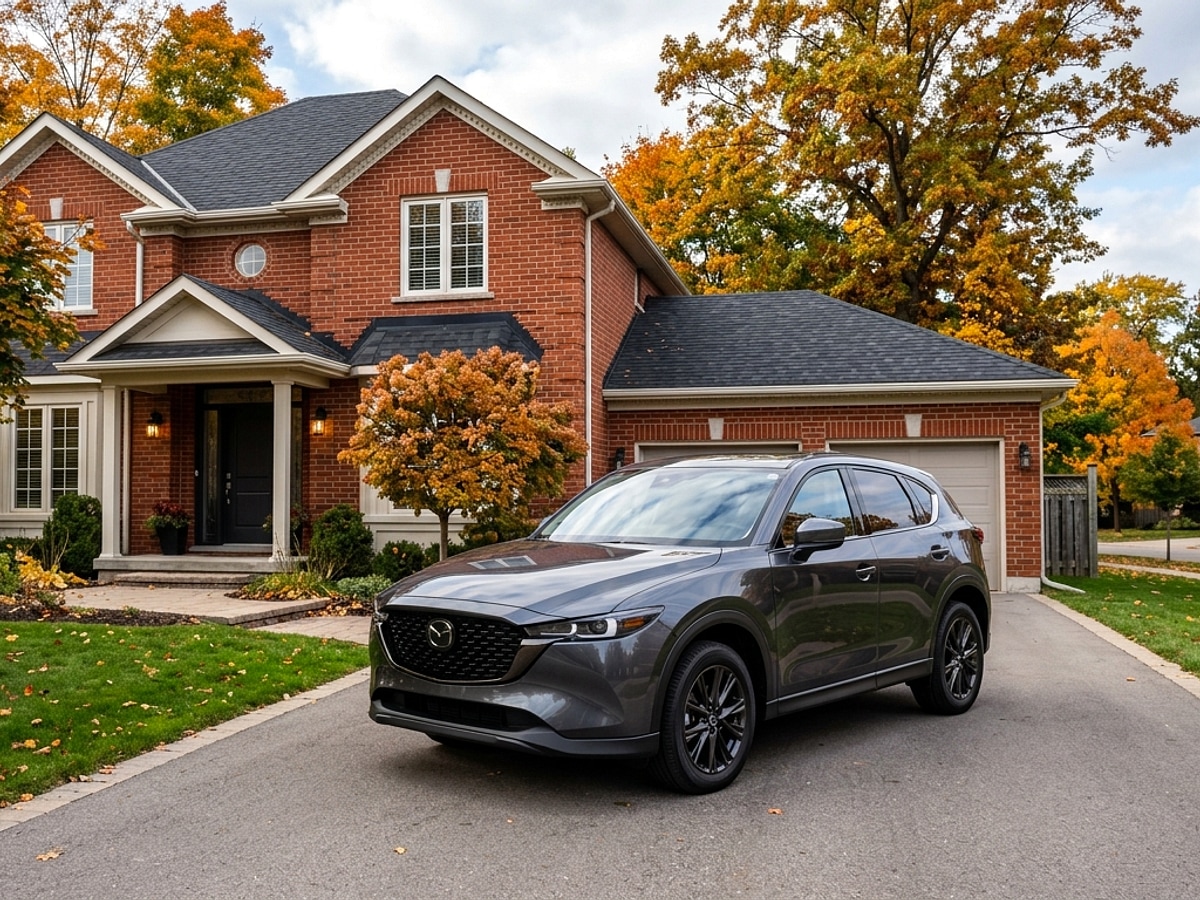
Discover how an $800/mo car payment reduces Ontario mortgage approvals by up to $135,000. Learn exact Canadian TDS math, stress tests, and solutions.
Direct Underwriting Answer: Every $100 per month in recurring consumer debt reduces Canadian mortgage borrowing capacity by roughly $15,000 to $17,000, depending on the qualifying stress test rate and amortization schedule. When a borrower's qualification is constrained by their Total Debt Service (TDS) ratio, an $800 monthly auto loan or lease eliminates $134,246.65 (~$135,000) in mortgage purchasing power at the statutory 5.25% OSFI Guideline B-20 qualifying floor over a 25-year amortization, or $134,493.70 at a 6.00% qualifying benchmark over a 30-year amortization. In prevailing 2026 Ontario market conditions—where commercial bank Prime sits at 4.45%, a 5-year fixed insured rate of 4.49% stress-tests at 6.49%, and an uninsured conventional rate of 4.64% stress-tests at 6.64%—that same $800 monthly vehicle obligation slashes institutional mortgage approval capacity by $117,936.21 to $127,843.60.
Authored by Dallas Martin, Licensed Mortgage Agent Level 2 (FSRA Licence #M17001133) at NewLife Mortgages, powered by The Mortgage Firm (FSRA Brokerage Licence #13466), this technical underwriting audit verifies the exact Canadian semi-annual compounding math, the 39% GDS / 44% TDS dual-ratio binding mechanics, the 5.0% household income buffer, the critical underwriting distinction between fixed-term auto loans and vehicle leases, and how home buyers across London ($662,000 detached benchmark), Woodstock ($658,000 benchmark), St. Thomas ($584,000 benchmark), and Strathroy can restore their lost purchasing power.
The Canadian Mortgage Stress Test: Why Do Car Payments Carry a 168x Borrowing Penalty?
Car payments carry up to a 168x mortgage borrowing penalty because Canadian lenders evaluate monthly consumer debt against stress-tested qualifying rates under semi-annual compounding. Every $800 diverted to vehicle financing removes up to $135,000 in allowable mortgage principal under OSFI Guideline B-20.
When prospective home buyers walk into a retail bank branch in London or Woodstock, they almost always evaluate their vehicle loan by its remaining principal balance. A buyer who owes $22,000 on a crossover SUV naturally assumes that a $22,000 vehicle debt can at worst reduce their home buying budget by $22,000. Institutional mortgage underwriting operates on cash-flow servicing rather than principal balances: lenders care strictly about the $800 monthly payment obligation and how much mortgage principal that $800 monthly cash flow could otherwise amortize under federal stress-testing rules.
How Does Canadian Semi-Annual Compounding Compare Against Monthly Debt Servicing?
Under Section 6 of the Canada Interest Act, fixed-rate residential mortgages compound semi-annually, not in advance. Underwriters convert the nominal annual stress-test rate into an effective monthly compounding factor to determine how much mortgage principal each dollar of monthly car debt eliminates.
In Canadian residential mortgage underwriting, contractual borrowing capacity is governed by the qualifying stress-test interest rate () mandated by the Office of the Superintendent of Financial Institutions (OSFI Guideline B-20) for uninsured mortgages and the federal Department of Finance for default-insured mortgages. Because Canadian mortgage interest compounds semi-annually rather than monthly, the effective monthly compounding rate () must first be derived from the nominal annual qualifying rate ():
r_m = (1 + r / 2)^(1/6) - 1
2. Monthly Mortgage Debt Service Factor (Factor) over n Months (Amortization Years × 12):
Factor = [ r_m × (1 + r_m)^n ] / [ (1 + r_m)^n - 1 ]
3. Principal Borrowing Capacity Reduction (ΔP) from Monthly Auto Liability (ΔPMT):
ΔP = ΔPMT / Factor
Expressed in formal actuarial notation for institutional verification:
When Total Debt Service (TDS) acts as the active binding constraint on an application file, dividing an ongoing $800 monthly vehicle payment () by the monthly payment factor reveals the exact dollar contraction in maximum mortgage approval.
How Do OSFI Guideline B-20 Benchmarks Compare the 5.25% Floor Against Current Retail Spreads?
OSFI Guideline B-20 requires borrowers to qualify at the greater of their contract mortgage rate plus 2.00% or the statutory 5.25% floor. Across qualifying stress rates from 5.25% to 6.64%, an $800 monthly car payment eliminates $117,936 to $145,797 in mortgage capacity.
Federally regulated lenders and default insurers (CMHC, Sagen, and Canada Guaranty) test every borrower at the higher of the contract rate plus 2.00% or the statutory minimum floor of 5.25%. While standard high-ratio insured purchases use a 25-year amortization, post-December 2024 federal rules permit 30-year insured amortizations for first-time home buyers and buyers of newly constructed homes, alongside 30-year uninsured conventional amortizations with 20% down. The table below audits the exact borrowing power lost per $800/month auto liability across every benchmark qualifying tier:
GDS vs. TDS Ratios: When Does an Auto Loan Directly Impact Your Mortgage Borrowing Power?
Prime institutional lenders cap Gross Debt Service (GDS) at 39% and Total Debt Service (TDS) at 44% of gross household income. An auto payment directly cuts mortgage borrowing capacity whenever total monthly consumer obligations exceed the 5.0% spread between GDS and TDS.
Residential underwriting in Canada is governed by two simultaneous debt-service ceilings. For prime institutional borrowers with a credit score of 680 or higher qualifying under OSFI-regulated bank guidelines or default-insured channels (CMHC, Sagen, Canada Guaranty), the maximum allowable Gross Debt Service (GDS) ratio is 39%, and the maximum allowable Total Debt Service (TDS) ratio is 44%:
GDS = [ Stress-Tested Principal & Interest + Property Taxes + Heating + 50% Condo Fees ] / Gross Monthly Household Income ≤ 39%
TDS Ratio (≤ 44% Prime Limit):
TDS = [ All GDS Shelter Costs + Auto Loans/Leases + Credit Card/LOC Minimums + Student/Personal Loans ] / Gross Monthly Household Income ≤ 44%
How Does the 5.0% GDS-to-TDS Debt Spread Work Across Household Income Scenarios?
The five-percentage-point difference between the 39% GDS limit and the 44% TDS limit creates a consumer debt buffer equal to 5.0% of gross monthly income. Any recurring vehicle payment exceeding that 5.0% buffer reduces allowable mortgage principal dollar for dollar.
If an applicant carries zero other consumer debt (no credit card balances, no lines of credit, and no student loans) prior to financing a vehicle, the first portion of an $800 monthly car payment is absorbed by the 5.0% spread between 39% GDS and 44% TDS. However, once existing consumer tradelines are present—or whenever household income is below $192,000—TDS overtakes GDS as the active binding constraint:
In Southwestern Ontario hubs such as London, St. Thomas, Woodstock, and Strathroy, where typical household applications range between $85,000 and $125,000 and borrowers frequently carry ordinary revolving credit card minimums (assessed at 3% of the statement balance) or student loan installments, the 5.0% GDS-to-TDS buffer is already fully occupied. Consequently, the entire $800 monthly vehicle obligation acts as an unbuffered liability against the 44% TDS ceiling, triggering the full $118,000 to $135,000 reduction in mortgage qualification.
What Does a Step-by-Step Approval Walkthrough Look Like for an Ontario Home Buyer?
For a Southwestern Ontario household earning $115,000 annually whose 5.0% consumer debt buffer is already occupied by a student loan or credit line, eliminating an $800 monthly car payment immediately restores $119,543 to $134,494 in mortgage approval power.
Consider a real-world underwriting file for a buyer shopping in London ($662,000 detached benchmark), Woodstock ($658,000 benchmark), or St. Thomas ($584,000 benchmark) earning $115,000 gross annual income ($9,583.33/month). The applicant carries a modest $479.17/month student loan and credit card minimum that exactly fills their 5.0% GDS-to-TDS spread, making every dollar of their $800/month auto payment bind directly against the 44% TDS ceiling ($4,216.67/month total debt limit):
You can model your own household income, property taxes, and monthly vehicle obligations in real time using our Ontario mortgage payment and stress test calculator or request a fully underwritten file audit through our London Ontario mortgage pre-approvals desk.
2026 Home Buying Power Estimator (London Ontario)
Estimate your buying power using GDS/TDS debt service thresholds (39% / 44%) and the 2026 mortgage stress test. Subject to full underwriting review with Dallas Martin.
Qualifying Estimate
Auto Loans vs. Vehicle Leases: What Are the Key Underwriting Differences in Ontario?
Institutional underwriters treat fixed-term auto loans and vehicle leases differently. Fixed installment car loans with fewer than 10 to 12 payments remaining can often be excluded from TDS ratios, whereas vehicle leases are treated as perpetual recurring liabilities regardless of maturity.
Not all $800 monthly vehicle payments are treated equally inside a lender's underwriting system. Understanding how Equifax and TransUnion tradelines are coded—and how institutional credit policies evaluate amortizing installment loans versus open-ended lease contracts—can save a home purchase without requiring an immediate lump-sum payout.
How Does the 10-Payment Exclusion Rule Work and Why Do Auto Leases Create Underwriting Pitfalls?
Under the 10-to-12-payment exclusion rule, prime lenders may waive an expiring car loan from TDS calculations if the buyer documents liquid savings covering the remaining balance. Leases never qualify because underwriters assume the driver will lease a replacement vehicle.
- Fixed-Term Auto Installment Loans (The 10-to-12-Month Exclusion Rule): If you have a fixed-term auto loan with fewer than 10 to 12 monthly payments remaining (for example, 9 months left at $800/month = $7,200 remaining balance), select prime institutional lenders will exclude the $800 monthly payment from your TDS ratio without requiring you to pay off the loan prior to closing, provided you can document sufficient liquid reserves (above and beyond your down payment and 1.5% closing cost buffer) capable of extinguishing the remaining balance.
- Vehicle Leases (Perpetual Liability Classification): Auto leases almost never qualify for the 10-payment exclusion rule—even if your lease expires in 60 days. Because leased vehicles must either be returned and replaced with a new lease or bought out for a substantial residual lump sum at maturity, institutional underwriters treat lease payments as indefinite, recurring obligations that must be factored into your TDS ratio regardless of remaining term length.
What Strategic Options Restore Lost Mortgage Borrowing Power for Ontario Home Buyers?
Ontario borrowers can restore lost mortgage capacity by paying off small auto loan balances with high monthly payments, consolidating vehicle debt into an 80% LTV home equity refinance, or utilizing alternative B-lenders that expand TDS allowances to 48% to 50%.
When a retail bank branch runs your numbers and declines your application because an $800 vehicle payment pushes your TDS ratio past 44%, branch staff rarely explain how to restructure your balance sheet. Worse, borrowers who get declined at one bank often walk across the street to apply at three more retail branches—triggering multiple hard credit inquiries that damage their Equifax score. Working with a fiduciary mortgage broker requires only a single credit pull to audit your file across more than 50 institutional, credit union, and alternative lenders.
How Does Consolidating Vehicle Debt via an 80% LTV Home Equity Refinance Work?
Existing Ontario homeowners can eliminate an $800 monthly car payment by consolidating vehicular debt into a mortgage refinance up to 80% Loan-to-Value, replacing a short-term auto loan with a 25- or 30-year mortgage amortization that slashes monthly cash outflow by over 80%.
- Pre-Closing Debt Reallocation (Trading $22,000 of Cash for $135,000 of Borrowing Power): If you have $22,000 left on an $800/month auto loan and enough savings to stay above your minimum down payment threshold, paying off that $22,000 vehicle balance prior to mortgage underwriting unlocks $118,000 to $135,000 in additional mortgage qualification—a nearly 6-to-1 leverage return on capital. First-time buyers can simultaneously replenish their down payment liquidity by stacking the First Home Savings Account ($40,000 individual / $80,000 couple) and the RRSP Home Buyers' Plan ($60,000 individual / $120,000 couple) for up to $200,000 in tax-advantaged capital; see our master guide on First-Time Home Buyer Down Payment Stacking: FHSA and RRSP HBP Tax Advantage.
- Consolidating Vehicular Debt into an 80% LTV Mortgage Refinance: For current homeowners in London, St. Thomas, Woodstock, or Strathroy preparing to upsize or renew, consolidating vehicular debt into a mortgage refinance up to 80% LTV rolls a $25,000 auto loan (costing $800/month) into a prime conventional mortgage (costing roughly $140/month), freeing up $660/month in permanent household cash flow. If you are renewing without adding new funds, you can also transfer lenders without re-qualifying under the stress test via The OSFI Straight Switch Exemption: How to Fire Your Bank at Renewal Without the Stress Test.
How Do Alternative B-Lenders and Extended 48% to 50% TDS Ratio Approvals Work?
When a vehicle payment pushes a borrower's TDS ratio past the 44% bank limit (for example, to 47.3%), regulated alternative B-lenders approve extended TDS ratios up to 48% to 50% with a minimum 20% down payment (maximum 80% LTV).
When an essential work truck or family SUV pushes an applicant's TDS ratio beyond prime institutional limits (such as 47.3% TDS) and paying off the vehicle is not financially practical before closing, borrowers can utilize alternative B-lender ratio exceptions:
- Regulated Alternative B-Lenders (48% to 50% TDS Allowances): Institutional alternative balance-sheet lenders (such as Equitable Bank, Home Trust, Haventree, and Bridgewater) approve expanded GDS/TDS ratios up to 48% to 50% (and up to 30- or 35-year amortizations) for borrowers with at least a 20% down payment (maximum 80% LTV), typically carrying a 100 to 200 basis point rate spread and a standard 1.0% lender origination fee.
- Self-Employed Bank Statement & Stated Income Programs (Mandatory 20% Down / 80% LTV): Incorporated contractors, transport operators, and business owners who write off vehicle expenses through their corporation can qualify using 6-to-12-month business bank statement cash-flow programs. Under mandatory Canadian underwriting rules, all stated income and bank statement verification programs strictly require a minimum 20% down payment (maximum 80% LTV), and any personal or un-offset auto obligations are still evaluated against extended B-lender TDS limits.
- Short-Term Asset-Backed Private Bridges (12-to-24-Month Exit Strategy): For complex transitional files requiring immediate closing up to 75% to 80% LTV without strict debt-service ratio caps, Mortgage Investment Corporations (MICs) and private syndicates provide short-term bridge financing paired with a written 12-to-24-month exit plan back to prime institutional rates once the auto loan amortizes down or is consolidated.
Frequently Asked Questions: How Do Ontario Car Loans and Leases Affect Mortgage Approvals?
Below are the verified institutional underwriting answers to the most common questions Ontario home buyers ask regarding how monthly car loans, vehicle leases, and credit lines affect mortgage pre-approvals under OSFI Guideline B-20.
How much does a $100 per month car payment reduce mortgage approval in Canada?
Every $100 per month in recurring consumer debt reduces Canadian mortgage borrowing capacity by approximately $14,742 to $16,781 on a 25-year amortization (and up to $18,225 on a 30-year amortization) when Total Debt Service (TDS) is the active binding constraint.
Does a car lease hurt my Ontario mortgage approval more than a car loan?
Yes, when the contract is near maturity. A fixed-term car loan with fewer than 10 to 12 payments remaining can often be waived from TDS calculations if you hold liquid savings, whereas a car lease is always counted as a permanent monthly liability.
Should I use part of my down payment to pay off my car loan before applying for a mortgage?
If your car loan has a small remaining balance (such as $15,000 to $22,000) but a high monthly payment ($700 to $800/month), paying it off before closing can boost your maximum mortgage approval by $118,000 to $135,000—far outweighing the smaller down payment reduction.
Why Should I Lock In a 120-Day Wholesale Rate Hold Before Restructuring My Auto Debt?
Securing a 120-day wholesale rate hold with Dallas Martin freezes your qualifying stress-test rate for four months while you pay down or restructure vehicle debt, guaranteeing protection against bond yield spikes and automatic rate reductions if rates drop before closing.
You can also subscribe to the NewLife Rate Watcher to receive instant alerts whenever Government of Canada 5-year bond yields or Bank of Canada policy rates shift your qualifying stress-test ceiling.
Want an Exact TDS & Auto Debt Audit Before You Shop for a Home?
Do not let a retail bank branch decline your file or trigger multiple credit pulls over a restructure-ready car payment. Connect directly with Dallas Martin, Licensed Mortgage Agent Level 2 (FSRA Licence #M17001133) at NewLife Mortgages, powered by The Mortgage Firm (FSRA Brokerage Licence #13466), for a single-inquiry wholesale underwriting audit across London, St. Thomas, Woodstock, Strathroy, and all of Ontario.
Book Your Custom TDS & 120-Day Rate Hold Audit