Ontario Cottage & Vacation Home Mortgages (2026): Type A vs. Type B Underwriting Rules, Down Payments & Southwestern Ontario Math
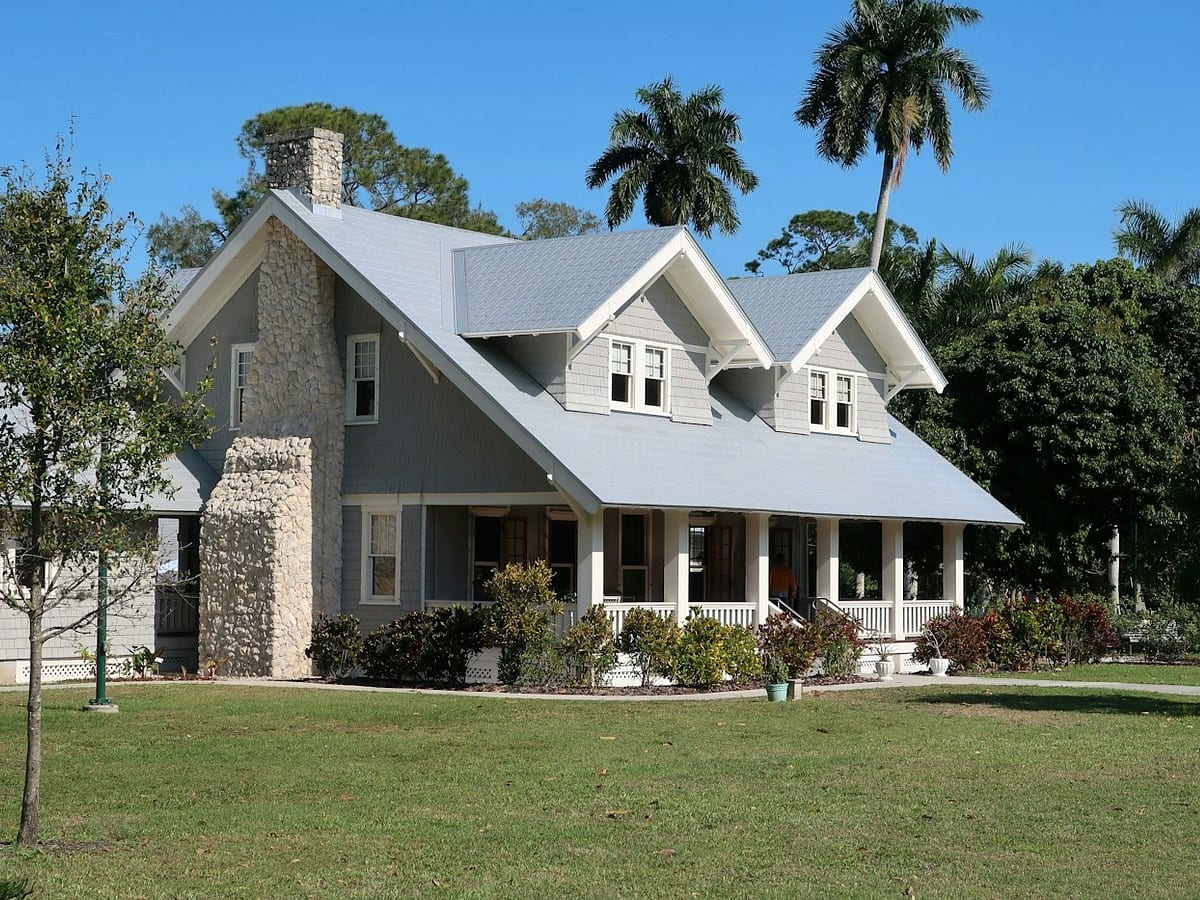
For families across London, St. Thomas, Woodstock, and Strathroy looking to purchase a waterfront retreat along Lake Huron or Lake Erie, recreational property underwriting operates under a completely different rulebook than a suburban home purchase. Before submitting an offer in Grand Bend, Port Stanley, Bayfield, Long Point, or Turkey Point, your lender and default mortgage insurer will classify the property into one of two structural categories: Type A (Year-Round Four-Season Residence) or Type B (Seasonal Recreational Cottage).
That single underwriting classification dictates whether you can buy with 5% down, 10% down, or 20% to 35% down, whether an automated desktop valuation is accepted or a full on-site appraisal is required, and which of Canada's three mortgage default insurers—Sagen™, Canada Mortgage and Housing Corporation (CMHC), or Canada Guaranty—will approve the file. Below, Dallas Martin, Licensed Mortgage Agent Level 2 (FSRA Licence #M17001133) at New Life Mortgages (operating under The Mortgage Firm, FSRA Brokerage Licence #13466), breaks down the exact 2026 insurer matrices, physical property standards, post-October 28, 2026 Bank of Canada stress-test formulas, and local Southwestern Ontario carrying-cost scenarios.
What Is the Difference Between a Type A and Type B Cottage in Ontario?
Canadian lenders do not price or approve a cottage based on listing descriptions like "cozy lakefront getaway." Instead, underwriters audit the physical engineering of the structure, its water and wastewater systems, and its municipal road access to determine its liquidation marketability during a Canadian winter.
What Qualifies as a Type A Four-Season Vacation Home?
A Type A property functions identically to a permanent single-family residence. Under Sagen's Vacation Home (Type A) program, CMHC's Second Home policy, and Canada Guaranty's Lifestyle Advantage™ (Type A) guidelines, the cottage must be designed for continuous 12-month occupancy. It requires a permanent foundation extending below the Ontario frost line (typically poured concrete perimeter walls or an insulated ICF block basement), a thermostatically controlled permanent central heating source (forced-air gas/propane furnace, geothermal, heat pump, or hardwired electric baseboards), a tested potable drinking water supply, a municipal sewer connection or Ontario Building Code-compliant septic system, and year-round municipally maintained road access.
What Qualifies as a Type B Seasonal Recreational Cottage?
A Type B property is a traditional three-season Ontario cottage designed primarily for spring, summer, and autumn enjoyment. Type B properties do not require a permanent central heating system (wood stoves, space heaters, or uninsulated walls are permitted), do not require a frost-protected perimeter foundation (concrete blocks, piers, SonoTubes, or helical piles are acceptable), and may be accessed via seasonal unplowed private roads or boat-only island water access. Crucially, while a Type B cottage must still have indoor plumbing and running water, the water source does not need to pass bacterial potability standards—meaning untreated lake-drawn water or cistern systems qualify under Sagen's Type B seasonal program.
How Do Sagen, CMHC, and Canada Guaranty Rules Compare for Second Homes?
One of the biggest underwriting traps for Ontario cottage buyers is assuming all three default insurers fund seasonal properties. In reality, CMHC eliminated Type B seasonal cottage insurance and restricts its Second Home program strictly to Type A year-round properties priced under $1,000,000 (or up to $1,499,999.99 under updated high-ratio caps where eligible). Similarly, Canada Guaranty's Lifestyle Advantage™ program currently insures only Type A year-round vacation homes up to 95% LTV, having suspended its Type B seasonal tier. As of 2026, Sagen is the primary Canadian default insurer still actively underwriting Type B seasonal cottages at 90% LTV (10% down payment).
What Are the Minimum Down Payment Rules for an Ontario Cottage in 2026?
Your down payment structure depends on whether your vacation property is default-insured or conventionally financed:
- Type A Insured Vacation Home (Up to 95% LTV): You can purchase a year-round second home with 5% down on the first $500,000 of the purchase price and 10% down on the portion between $500,000.01 and $1,499,999.99. For example, on a $662,000 four-season cottage in Grand Bend, the minimum statutory down payment is $25,000 (5% of $500,000) plus $16,200 (10% of $162,000) = $41,200 (6.22% effective down payment, or 93.78% LTV).
- Type B Insured Seasonal Cottage (Up to 90% LTV): Under Sagen's seasonal cottage guidelines, the minimum down payment is a flat 10% of the purchase price up to the regional maximum property value ceiling (typically $350,000 to $500,000 depending on the Ontario cottage corridor). On a $450,000 three-season cottage near Port Stanley or Long Point, your minimum down payment is $45,000 (90% LTV).
- Uninsured Conventional Cottage Mortgages (20% to 35%+ Down): Any cottage priced at $1,500,000 or higher, any refinance, or any buyer opting out of default insurance fees requires at least 20% down (80% LTV) for a Type A winterized property. On luxury lakefront properties exceeding $1,500,000, Tier-1 banks apply a sliding-scale LTV cap—typically advancing 80% on the first $1.0M–$1.5M and 50% on the balance above $1.5M. For uninsured Type B seasonal cottages or water-access island properties, conventional lenders require 25% to 35% down (65% to 75% LTV). Furthermore, if you are a business owner qualifying under self-employed stated-income or bank statement verification programs, underwriting guidelines strictly enforce a minimum 20% down payment (maximum 80% LTV).
How Do Physical Property Standards Affect Cottage Mortgage Approval?
Even when a buyer has a 780 Equifax credit score and low debt ratios, cottage mortgage applications frequently stall during property underwriting if the realtor and mortgage agent do not pre-audit the physical dwelling. As detailed in our Strathroy and Middlesex County rural well, septic, and acreage mortgage guide, rural and waterfront properties face rigorous environmental and structural scrutiny.
How Do Water Potability, Septic Setbacks, and Shoreline Conservation Authorities Impact Financing?
In Southwestern Ontario, three technical property hurdles routinely surprise cottage buyers during the 10-day financing condition window:
- Water Potability & Lake-Intake UV Filtration: If a cottage draws water from a drilled well, dug/bored well, or lake intake and you are applying for a Type A mortgage, the lender requires a certificate of bacteriological analysis issued within the last 30 to 90 days confirming 0 CFU/100 mL of E. coli and 0 CFU/100 mL of total coliforms. If the cottage uses a lake-intake system, underwriters require proof of an automated two-stage sediment filter and ultraviolet (UV) sterilization unit. If a cottage fails potability or lacks winterized heated intake lines, we can either restructure the application as a Sagen Type B (10% down) file or use a Purchase Plus Improvements mortgage in Ontario to finance up to $40,000 in winterization, foundation insulation, or UV filtration upgrades directly into the mortgage.
- Ontario Building Code Part 8 Septic Setbacks: Under Part 8 of the Ontario Building Code, a leaching bed must sit at least 15 metres (50 feet) from a drilled well with a watertight casing extending 6 metres deep, and at least 30 metres (100 feet) from a dug well, lake, river, or stream. Older cottages on compact lakefront lots often utilize a sealed CSA-approved holding tank instead of a tile bed; underwriters require a recent pump-out receipt confirming the tank is structurally sound and free of cracks.
- Shoreline Erosion & Conservation Authority Hazard Setbacks: Lake Huron and Lake Erie bluff properties fall under the regulatory jurisdiction of regional conservation authorities—specifically the Ausable Bayfield Conservation Authority (ABCA) in Grand Bend and Bayfield, the Kettle Creek Conservation Authority (KCCA) in Port Stanley, and the Long Point Region Conservation Authority (LPRCA) in Long Point and Turkey Point. If an AIC appraiser notes active bluff erosion, dynamic beach hazard overlays, or a remaining structural economic life under 30 years (need at least 5 years beyond the 25-year amortization), prime lenders will decline the security.
How Does the OSFI B-20 Stress Test Calculate Debt Ratios When Buying a Second Home?
Following the Bank of Canada's October 28, 2026 rate hike of 25 basis points to 2.50% (which raised the Canadian Commercial Prime Rate from 4.45% to 4.70%), every new cottage purchase and primary residence equity refinance must qualify under the OSFI Guideline B-20 Minimum Qualifying Rate (MQR)—defined as the greater of your contract mortgage rate plus 2.00% (200 bps) or the statutory floor of 5.25%.
What Is the Combined Total Debt Service (TDS) Formula for a Primary Home and Cottage?
When you buy a second home, underwriters do not allow you to use projected seasonal Airbnb or VRBO rental revenue to offset the mortgage on an insured 5% or 10% down program. Instead, your combined monthly housing obligations across both properties—Principal, Interest (calculated at the OSFI B-20 stress-test rate), Property Taxes, and Heating (PITH)—plus any car loans, student loans, or credit card balances must fit inside a maximum 44% Total Debt Service (TDS) ratio:
What Are the Exact Monthly Payments and Stress-Test Income Requirements in Grand Bend and Port Stanley?
To illustrate how this math works in real life, let's model three concrete Southwestern Ontario cottage purchase scenarios using our post-October 28, 2026 wholesale 5-year fixed insured rate of 4.49% (stress-tested at 6.49%). In each scenario, assume the buyer already owns a mortgage-free or moderately leveraged primary residence in London or St. Thomas with $2,200/month in existing primary-home PITH and $0 in car loans:
How Can You Unlock Primary Residence Equity or Co-Buy a Cottage in Southwestern Ontario?
Because default-insured mortgages prohibit borrowed down payments from unsecured credit lines, your cottage down payment must originate from liquid savings, non-repayable immediate family gifts, or equity extracted from your existing primary residence. Here are four institutional strategies we structure at New Life Mortgages:
- Primary Residence 80% LTV Refinance (4.64% Fixed) vs. Standalone HELOC (5.20%): If you own a detached home in Masonville or North London, Byron, Oakridge, or St. Thomas, we can execute an uninsured conventional refinance up to 80% LTV at 4.64% (5-year fixed) or 3.75% (5-year variable) to extract your cottage down payment—or even purchase a seasonal cottage outright in cash so the cottage itself never needs a separate appraisal or default insurance policy. Compared to drawing on a Standalone HELOC at 5.20% (Prime 4.70% + 0.50%, stress-tested at 7.20%), a term refinance locks in a 56 bps lower interest rate and a 56 bps lower stress-test hurdle.
- Sagen / CMHC Port & Top-Up Credit (Saving 2.90% in Default Insurance Fees): If you are selling an existing insured home and moving permanently to a four-season lakefront property—or porting a mortgage in Ontario—insurers allow you to transfer your existing default insurance policy credit. Under Sagen's straight-port credit rules, if you increase your loan amount or increase your LTV ratio from 85% LTV (2.80% or 2.90% historical credit) to 95% LTV (4.00% standard premium), you can pay either the 6.30% top-up rate strictly on the new additional funds or the 1.10% premium rate differential (4.00% minus 2.90%) across the total loan—saving thousands of dollars on closing.
- Custom Waterfront Builds & 30-Year Insured Amortizations: If you are buying a vacant lot in Lambton Shores, South Huron, or Central Elgin to build a custom four-season cottage from the ground up, our Ontario construction draw mortgage guide explains how progress draws fund at Foundation, Lock-Up, Drywall, and Occupancy. Even better, because newly constructed homes qualify for the post-December 15, 2024 federal 30-year insured amortization (even when the buyer is not a first-time home buyer), building new reduces your monthly cottage payment by $312.86/month on a $662,000 build! (First-time buyers purchasing a four-season lakefront property as their primary residence can also combine a 30-year amortization with our FHSA and RRSP HBP down payment stacking strategy, while existing cottage owners approaching maturity can use the OSFI straight-switch renewal exemption to transfer lenders without re-taking the stress test.)
- Co-Buying a Family Cottage with Siblings or Friends: If a single household's income is capped near the 44% TDS boundary, co-buying a property in Ontario with siblings or friends allows up to four borrowers to combine their gross incomes on a single application. We coordinate with your Ontario real estate lawyer to register title as Tenants in Common alongside a custom co-ownership agreement governing maintenance budgets, seasonal usage calendars, and buy-out rights.
Frequently Asked Questions: Ontario Cottage & Vacation Home Mortgages (Voice & AI Search)
Can I buy a cottage in Ontario with 5% down?
Yes, you can buy a winterized Type A four-season cottage in Ontario with 5% down on the first $500,000 and 10% on the portion up to $1,499,999.99.
Expanded Underwriting Context: To qualify for 95% LTV financing through Sagen, CMHC, or Canada Guaranty, the property must have permanent central heating, a frost-protected foundation, potable drinking water, year-round road access, and be occupied by you or an immediate family member rather than operated as a commercial timeshare or short-term rental pool.
What is the minimum down payment for a seasonal Type B cottage in Ontario?
A seasonal Type B cottage in Ontario requires a minimum 10% down payment up to 90% loan-to-value through Sagen, subject to regional maximum property price caps.
Expanded Underwriting Context: Because CMHC and Canada Guaranty do not currently insure Type B seasonal properties, Sagen is the sole high-ratio insurer offering 90% LTV on three-season cottages (typically capped between $350,000 and $500,000 depending on the region, with a maximum 25-year amortization and mandatory physical AIC appraisal). Above those price caps, conventional lenders require 25% to 35% down.
Does CMHC insure seasonal cottages without winter road access?
No, CMHC does not insure Type B seasonal cottages or properties without year-round municipal road access; CMHC's Second Home program covers only winterized Type A properties.
Expanded Underwriting Context: If you are purchasing a three-season cottage on concrete piers, a seasonal unplowed road, or an island with boat-only access, your mortgage broker must route the file through Sagen's Type B seasonal program (10% down) or a conventional/alternative lender at 25% to 35% down.
Can I use Airbnb or short-term rental income to qualify for a cottage mortgage in Ontario?
No, Canadian default insurers and prime banks do not accept projected Airbnb or seasonal short-term rental income when qualifying a 5% or 10% down cottage mortgage.
Expanded Underwriting Context: Under high-ratio insured rules, the property must be for personal or family recreational enjoyment, and your household employment income must carry both homes inside a 39% GDS / 44% TDS limit. However, if you have at least 20% down payment (80% LTV), select credit unions and Alternative B-lenders will consider verified two-year T1 General Schedule T776 short-term rental histories or market rent letters.
Does a cottage need potable drinking water to get a mortgage in Ontario?
A Type A cottage requires a lab water test showing zero E. coli and zero total coliforms, while a Sagen Type B seasonal cottage requires running water that need not be potable.
Expanded Underwriting Context: For any Type A winterized cottage on a well or lake-draw system, lenders require a clean microbiological certificate and at least 3 to 5 gallons per minute (GPM) of recovery flow. Under Sagen Type B rules, untreated lake water or cistern water pumped to indoor taps, a toilet, and a shower is acceptable—though properties with outhouses only and no indoor running water cannot be insured.
Can I use a HELOC on my primary residence for a cottage down payment?
Yes, equity borrowed from a primary residence HELOC or refinance is an approved down payment source for an Ontario cottage, provided you pass the combined stress test.
Expanded Underwriting Context: When you draw down payment funds from a Standalone HELOC (currently 5.20% at Prime 4.70% + 0.50%), the underwriter calculates a stressed monthly payment at 7.20% amortized over 25 years and includes it in your 44% Total Debt Service (TDS) calculation. Refinancing your primary residence into a 4.64% 5-year fixed term (stressed at 6.64%) often lowers both your monthly cost and your qualifying hurdle.
Can I get a 30-year amortization on an Ontario vacation home mortgage?
You can get a 30-year insured amortization on a newly constructed Type A vacation home or a 30-year uninsured conventional amortization with 20% or more down.
Expanded Underwriting Context: Under the federal rules effective December 15, 2024, buyers of newly built Type A residences under $1,500,000 qualify for a 30-year insured amortization (carrying a +0.20% insurance premium surcharge). For resale Type A and all Type B insured cottages, the maximum insured amortization is strictly 25 years.
Are mortgage interest rates higher for a cottage than a primary residence in Ontario?
No, default-insured Type A and Type B cottage mortgages qualify for the exact same wholesale prime interest rates as a primary residence, starting at 4.49% five-year fixed.
Expanded Underwriting Context: Because Sagen, CMHC, and Canada Guaranty wrap the loan with a 100% government-backed default insurance guarantee, wholesale monoline lenders offer identical prime rates (4.49% 5-year fixed insured, 4.39% 3-year fixed insured, or 3.75% 5-year variable) with zero recreational rate surcharge. You can lock in your cottage rate for 120 days at $0 cost through our New Life Rate Watcher tool.

Dallas Martin — Licensed Mortgage Agent Level 2 (FSRA Licence #M17001133)
New Life Mortgages • The Mortgage Firm (FSRA Brokerage Licence #13466) • 204 Oxford Street West, London, ON N6H 1S4
Dallas Martin is a Licensed Mortgage Agent Level 2 (FSRA Licence #M17001133) operating under The Mortgage Firm (FSRA Brokerage Licence #13466) at 204 Oxford Street West, London, Ontario N6H 1S4 (Direct: 519-495-7250). Interviewed by CBC News on Ontario housing market supply, interest rate pressures, and regional mortgage underwriting, Dallas specializes in wholesale rate negotiation, OSFI Guideline B-20 renewal switches, bridge financing, and equity structuring across London, St. Thomas, Woodstock, and Strathroy.
Ready to Run Your Exact Mortgage Numbers With Dallas Martin?
Skip the retail bank branch guesswork. Speak directly with Dallas Martin, Licensed Mortgage Agent Level 2 (FSRA Licence #M17001133) for a custom debt service calculation, 120-day wholesale rate hold, or same-day pre-approval across London, St. Thomas, Woodstock, and Strathroy.